


One company, one price, one set of people in your house.
- Survey, heat-load calculation and design
- Equipment, brackets and condensate management
- Installation, testing and commissioning
- Chasing, core drilling, boxing and plastering
- Decoration and making good
- Handover, controls set-up and aftercare details
Yes. Almost every modern residential system is a reversible heat pump, which means it moves heat in either direction out of the room in summer, into it in winter. In heating mode it warms a room quickly and efficiently, which makes it useful in a loft or a home office you don’t want to heat the whole house for.
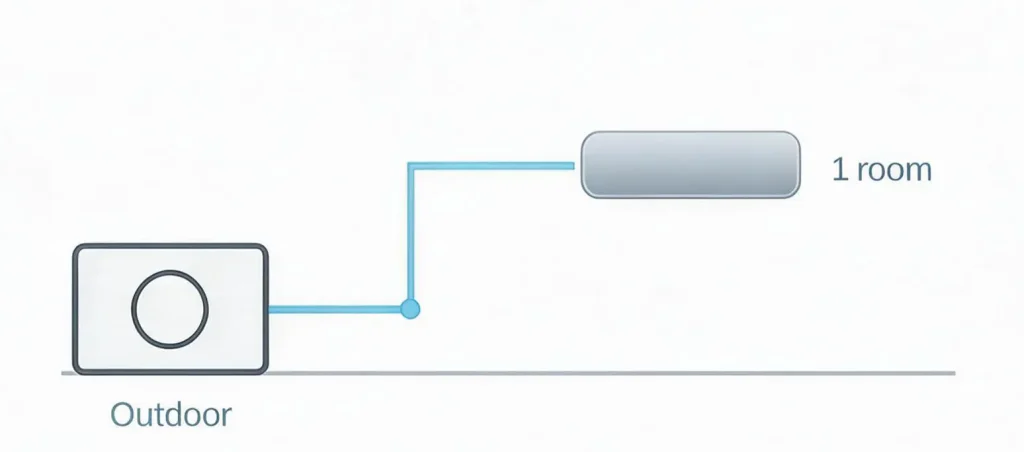
Most single-room systems are in and running within a day. Multi-split systems serving several rooms typically take two to three days, depending on how much pipework needs chasing into walls and how many indoor units there are. We’ll give you an exact timeframe at the survey once we’ve seen the property.
There’s dust from chasing walls and drilling for the outdoor unit’s pipework, but we sheet and cover the work areas before we start. Decoration made good and site clearance are included in the quoted price we don’t leave you to patch plaster or hoover up after we’ve gone.
Usually no most domestic installations fall under permitted development. It can be different in conservation areas, on listed buildings, or if the unit would face a highway. We check this as part of the survey and flag it upfront if a planning application would be needed, rather than after the quote.
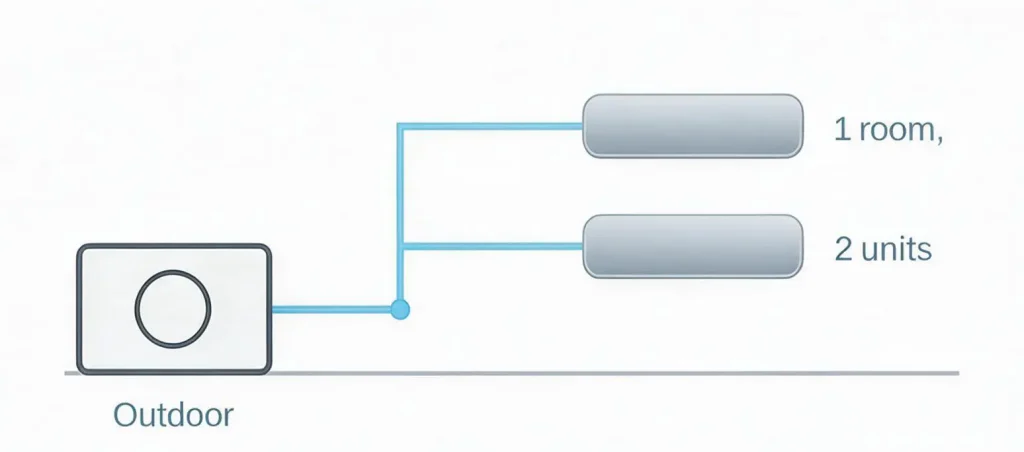
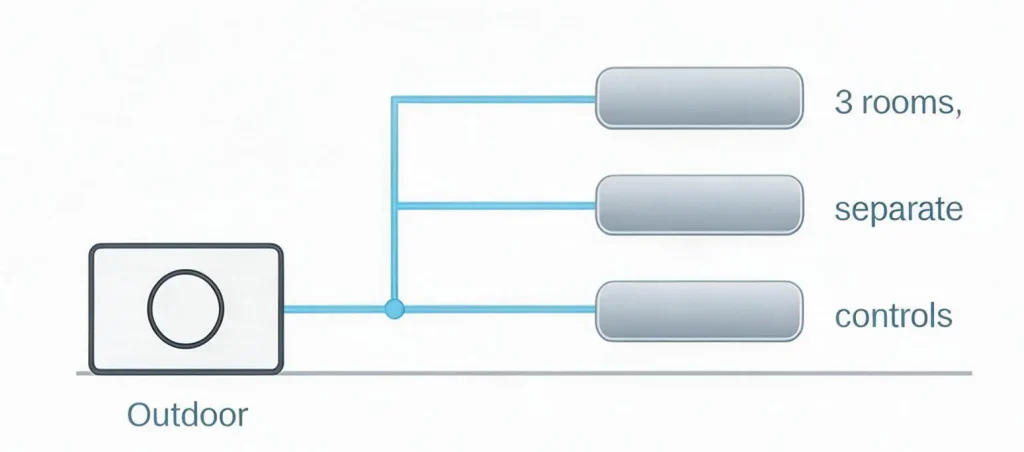
Yes, that’s what a multi-split system does. One outdoor condenser can run two to five indoor units, each controlled separately. It’s a common choice when you want AC in several rooms but don’t want an outdoor unit for each one.
Modern indoor units run at conversational-volume levels or quieter most people forget they’re on. Outdoor units are louder but modern compressors are far quieter than older systems; we also think about placement at the survey stage so noise isn’t directed at a neighbour’s window or your own bedroom.
Yes. Solid walls just change the installation approach pipework usually runs through a single core-drilled hole rather than through a cavity, and indoor units get positioned to keep pipe runs short and tidy. It’s one of the reasons having our own construction team matters: chasing and making good on solid brick or plaster is routine for us, not an afterthought.
Running cost depends on the system’s efficiency (SEER rating), room size, and how you use it, but because modern units are heat pumps, running one in winter is typically cheaper than electric heating for the same room. We can talk through rough running costs for your specific setup at the survey.